fbpx

Category

Non classifié(e)
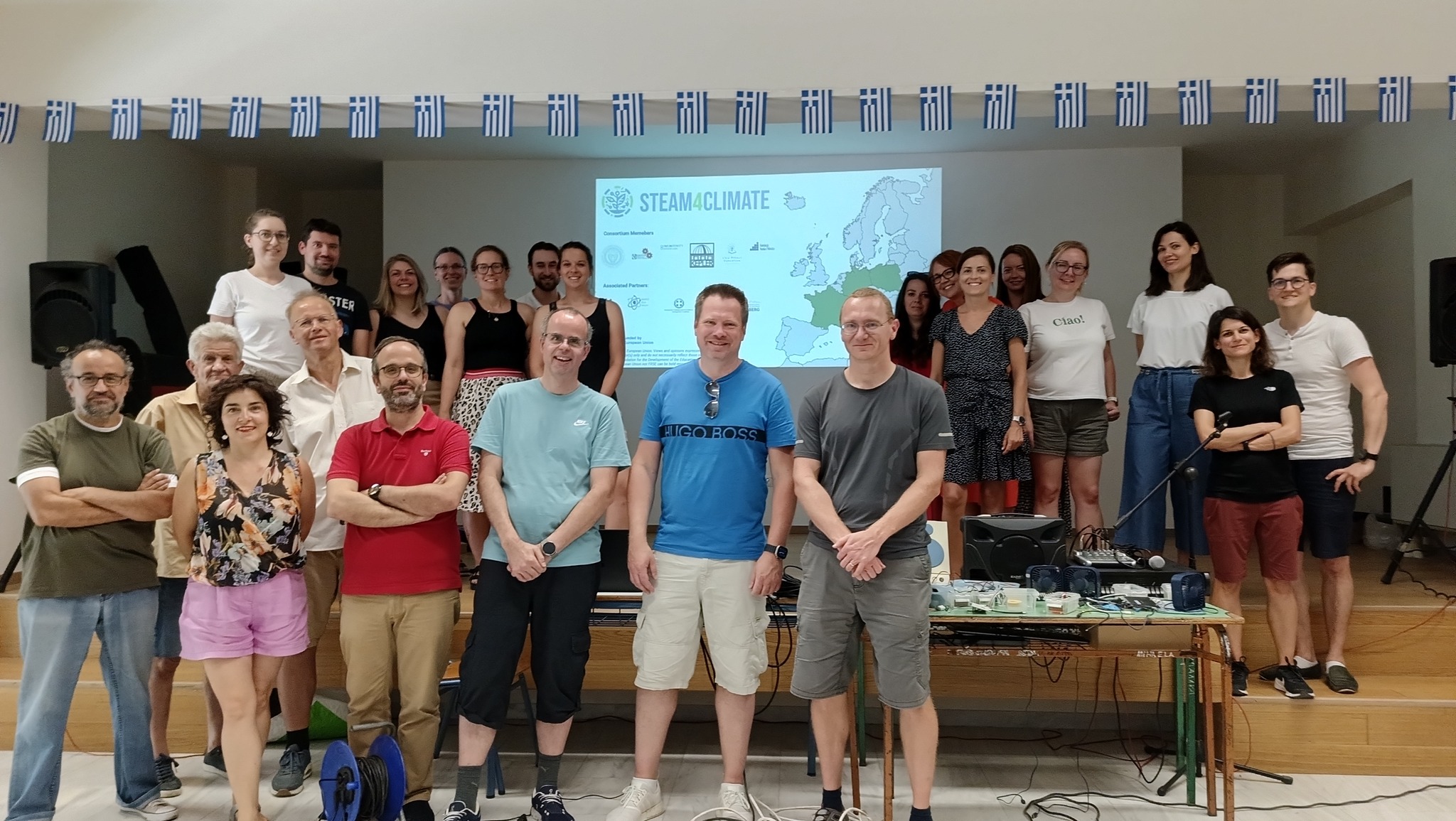
The STEAM4Climate#Erasmus+ Summer School concluded yesterday, leaving us with valuable takeaways for our educational practices and insightful suggestions for refining our resources! A big thank you to all the trainers for their inspiring sessions, and to the dedicated teachers from our #STEAM4CLIMATE partnership from Germany, Poland, and Greece for the curiosity, expertise, and enthusiasm they...
Read More
Materials: S4C_IntroWebinarDownload Student-Worksheet-Booklet-CO2-ChamberDownload Student-Worksheet-Wet-bulb-temperatureDownload Register now with the QR code Register through the following form: Registration form
Read More
The escalating challenges posed by climate change necessitate innovative solutions and a well-prepared populace capable of addressing these issues head-on. STEAM (Science, Technology, Engineering, Arts, and Mathematics) education plays a pivotal role in this preparation, equipping students with a holistic skill set that marries critical analysis with creative problem-solving. Science for Understanding: Science serves as...
Read More
The intersection of climate change and education is a critical frontier, especially as we strive to equip future generations with the knowledge and tools they need to face environmental challenges. STEAM (Science, Technology, Engineering, Arts, and Mathematics) education is pivotal in this endeavor, offering a comprehensive approach that blends creative problem-solving with scientific rigor. Exploring...
Read More
As the globe faces escalating challenges due to climate change, the role of education in crafting solutions cannot be overstated. STEAM (Science, Technology, Engineering, Arts, and Mathematics) education emerges as a crucial framework for empowering the next generation of innovators and problem solvers. This interdisciplinary approach not only enriches the learning experience but also equips...
Read More
EU Funding Disclaimer
EU Co-Funding Logo

This publication has been developed with the financial support from the European Commission in the framework of the Erasmus+ programme. The information and views set out in this publication are those of the authors and the European Commission may not be held responsible for the use, which may be made of the information contained herein. [Project number: KA220-SCH-E7195302]